

Sabbath Thoughts
The Sabbath Before Sinai and the Sunday Texts
Claiming nobody kept the Sabbath before Sinai is to assume what the Bible never says, or even insinuates. The Sabbath was there before the fall, and will still be here for eternity after sin is gone.
I’ve seen many point to Nehemiah 9:13-14, where God “made known” His holy Sabbath to Israel at Sinai. But using that verse to claim nobody before Israel knew or kept the Sabbath is, again, lazy hermeneutics.
Think about it.
The Sabbath was there BEFORE the fall. Genesis 2:2-3 tells us that God rested on the seventh day, blessed it, and sanctified it. That was before sin ever entered the world, long before there was an Israelite or Jew.
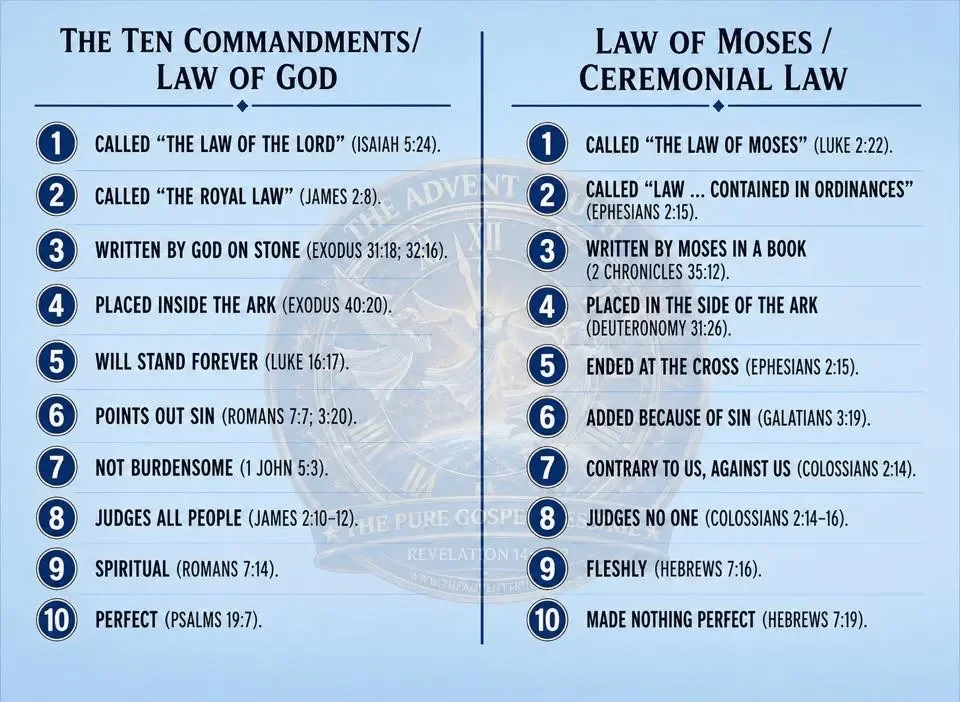
Paul, on the other hand, describes the temporary law as the one that was “added because of transgressions” (Galatians 3:19). In other words, something instituted before sin cannot logically be the same thing that was later added because of sin.
Moreover, Genesis 6 describes Noah as obedient, someone who was blameless and walked with God. Genesis 26:5 describes Abraham similarly:
“Because that Abraham obeyed my voice, and kept my charge, my commandments, my statutes, and my laws.” That was centuries before Sinai.
Psalm 19 and Psalm 119 repeatedly point to God’s law and commandments as righteous, perfect, and enduring. Jesus does the same in John 14:15 when He says, “If ye love me, keep my commandments.” Compare that language with the second of the Ten Commandments, where God speaks of showing mercy to those who love Him and keep His commandments.
And what should be most obvious is that God had already chided Israel for breaking the Sabbath in Exodus 16. That was before Exodus 20, by the way.
When some Israelites went out looking for manna on the seventh day, God asked:
“How long refuse ye to keep my commandments and my laws?”
Exodus 16:28
God wasn’t speaking as though He had just invented a new commandment. He was rebuking them for refusing to keep something that was already His law.
Moreover, Exodus 5:5 shows Pharaoh becoming angry with Moses because he was making Israel “rest.” The Hebrew word is shabath, the verbal root from which we get Sabbath, meaning to cease or rest. This was before Sinai, before Exodus 20, before they ever left Egypt. And yet somehow the Sabbath supposedly didn’t exist until Sinai?
You see, none of the anti-Sabbath excuses pass the Bible test.
What About Acts 20:7 and 1 Corinthians 16:2?
Using Acts 20:7 and 1 Corinthians 16:2 to support Sunday sacredness is also lazy hermeneutics when neither text actually says anything about Sunday becoming sacred.
It’s eisegesis to read Sunday observance into passages where it isn’t stated.
Here’s the deal: the Greek wording behind “first day of the week” in these passages uses sabbaton, the word associated with Sabbath/week, and the passages have to be understood in context.
For example, Acts 20:7 describes an evening farewell meeting. Paul was preparing to leave the following morning for his next destination. Under the biblical sunset-to-sunset reckoning of days, this would place the meeting on what we call Saturday night.
A Saturday night vespers, if you will.
Interestingly, the word translated “preached” is dialegomai, which carries the idea of reasoning, conversing, or discussing. This was a farewell gathering where Paul continued speaking until midnight. There is absolutely nothing in the passage declaring Sunday to be sacred, much less announcing that Sunday replaced the Sabbath.
As for 1 Corinthians 16:2, nothing is mentioned about church at all.
The preceding context has Paul speaking about the return of Jesus and the resurrection of the righteous dead. At the end of chapter 15, Paul encourages the Corinthian believers to remain steadfast and always abound in the work of the Lord. Then he immediately follows that with instructions concerning the collection for the saints. He tells them to regularly “lay by him in store” so that the money will already be collected when he arrives.
Even if you take the phrase as referring specifically to the first day of the week, absolutely nothing says it was a church service. Nothing says Sunday was holy. Nothing says the Sabbath had changed. It is simply Paul telling believers to set aside an offering so it would be ready when he came through.
But Doesn’t the Same Greek Refer to Sunday in the Gospels?
Yes, and this is where context matters.
The Greek expression used in the resurrection accounts is understood as referring to the first day of the week because the surrounding narrative establishes exactly where we are in the weekly cycle. Scripture tells us Jesus was crucified on the preparation day, remained in the tomb over the Sabbath, and rose on the first day of the week.
But notice something important. The Gospels still consistently identify the Sabbath as the Sabbath even in the crucifixion and resurrection story.
Luke 23:56 specifically says the women:
“rested the sabbath day according to the commandment.”
Then Luke 24:1 describes them returning to the tomb on the first day of the week.
The resurrection didn’t erase the distinction between the Sabbath and the first day. The Gospel writers themselves maintained it.
And above all this is the biggest problem for Sunday sacredness:
Scripture contains no command or allowance for changing the Sabbath, nor does it give Christians freedom to simply disregard it.
In fact, the principle of Hebrews 9:16-17 makes this especially significant. Once the testator dies, the testament is ratified. If Jesus intended to change something as significant as one of the Ten Commandments, He would have needed to establish that change before His death.
But He never did.
There is no command from Jesus saying, “After My resurrection, keep the first day.” There is no apostolic declaration saying, “The seventh-day Sabbath has been abolished.” There is no Scripture saying, “Sunday is now the Lord’s Day.” There is no verse transferring the blessing and sanctification of Genesis 2 from the seventh day to the first.
Instead, the Sabbath appears at Creation before sin, throughout Scripture, in the ministry of Christ, after the cross, and even in the new earth, where Isaiah 66:22-23 says that “from one sabbath to another” all flesh will come to worship before God.
Think about that. The Sabbath was here before sin entered. And the Sabbath will still be here after sin is gone.
Sunday sacredness cannot be supported with Scripture.
The Sabbath can, and is.
For more study:
https://www.theadventtruth.com/freestudies/thesabbathtruth
Related book:
